




History of the Building

The Museum of Modern Art Carinthia is housed in the so-called ‘Burg’ (‘Castle’), an important historic building dating from the Reformation period, located in the centre of Klagenfurt, the capital of the province of Carinthia.
The building was constructed in 1586 to accommodate the ‘Collegium sapientiae et pietatis’ (College of Wisdom and Piety), a school for the Protestant nobility. Following the closure of the school during the Counter-Reformation, the Carinthian Estates began using the building as their residence in 1601, and the ‘Castle’ became the home of the castellan. Following fires in 1636 and 1723, the building was rebuilt twice.
The Castle Chapel was constructed in 1733/34 as part of the construction of the north facade. In 1747, Empress Maria Theresa ordered the vacation of the ‘Castle’ to make it available as an administrative building for the newly established provincial authority, the ‘Repräsentation und Kammer’ (‘Representation and Chamber’, renamed the ‘ Landeshauptmannschaft’, or ‘Provincial Government’, in 1763). In 1773, a second storey was added, and the facade was given a uniform design.
From 1791 to 1918, the building served as the seat of the provincial governor and was available as accommodation for the provincial ruler or the emperor; the last time it was used for this purpose was by Emperor Franz Joseph I in 1907, on the occasion of the imperial military manoeuvres. After the First World War, the ‘Castle’ initially served as the seat of the Yugoslav military command in 1919 and, from 1920, as the seat of the Interallied Commission for the plebiscite. From then on, it was used as an administrative building and, until 1928, also as a school building.
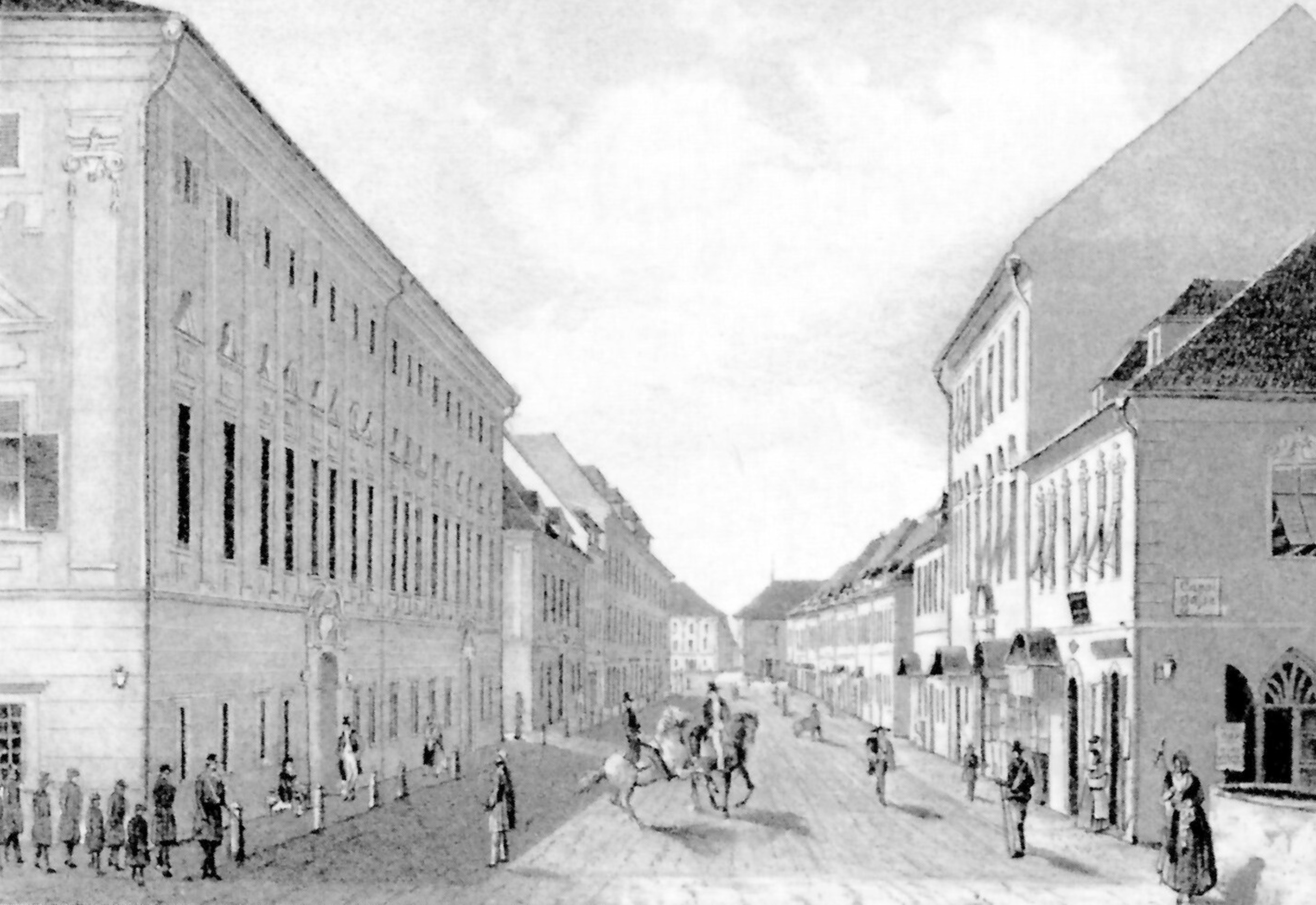


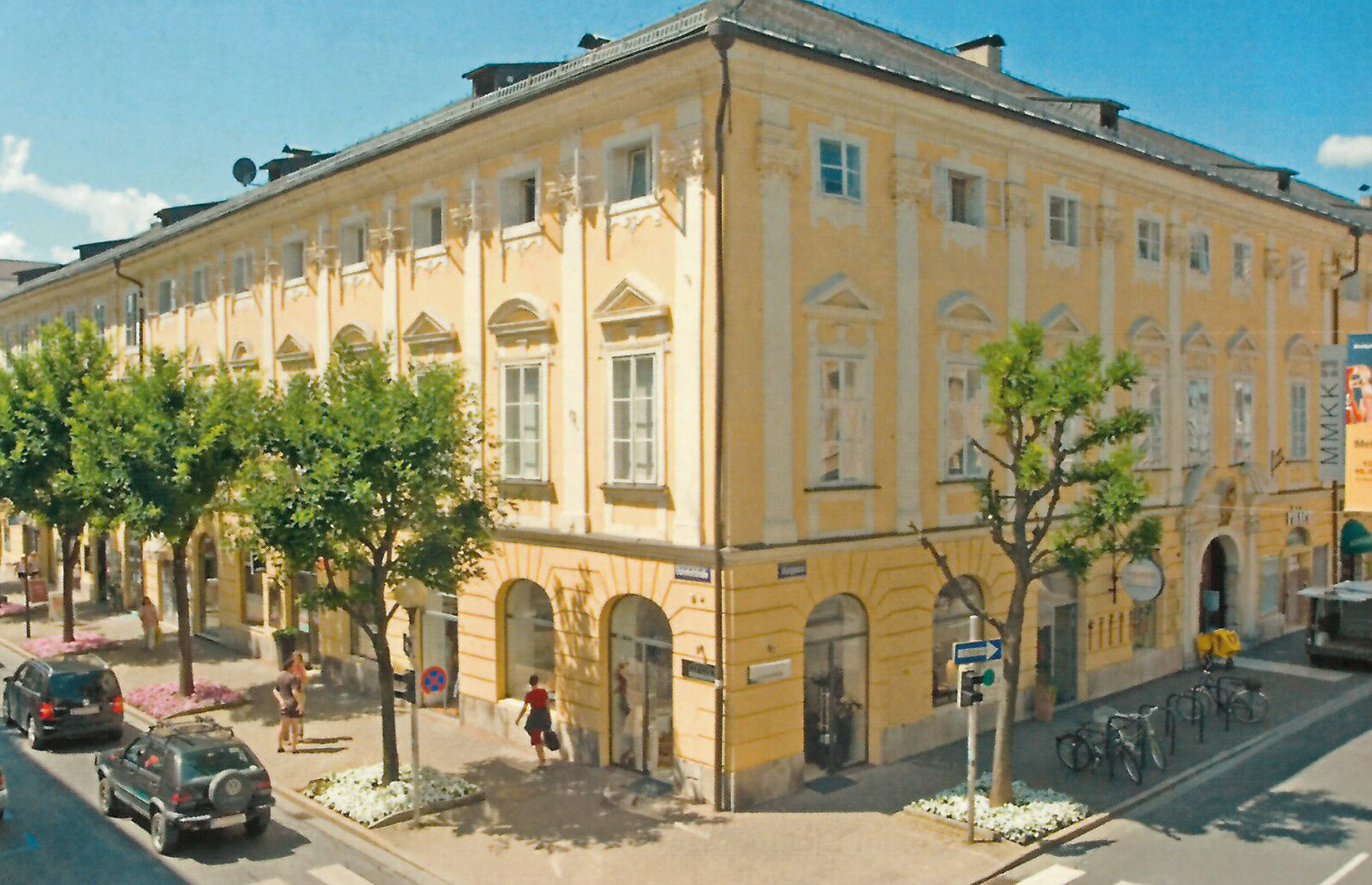
With the opening of the Carinthian Regional Gallery, initially established as an association in 1928, the building was given a new purpose in 1933.
Initially, 33 paintings and one sculpture were exhibited in two rooms. New rooms were added between 1934 and 1937, eventually allowing 98 works of art to be displayed. Following the annexation of Austria by Nazi Germany in 1938, the Nazi political police (Geheime Staatspolizei, also known as Gestapo) established their headquarters in the ‘Castle’. This led to the partial relocation of the provincial administration and the vacation and closure of the gallery. In 1942, the ‘Carinthian Regional Gallery’ association was dissolved, and its collection was incorporated into the holdings of the Reichsgau of Carinthia. In 1943, the collection was relocated to protect it from the threat of bombing.
After the war, the Province of Carinthia took over the Regional Gallery. In 1946, the Carinthian State Museum was entrusted with managing the Regional Gallery’s collection. In 1965, under the direction of Dr.in Leopoldine Springschitz, the Carinthian Regional Gallery was moved back to the ‘Castle’, to rooms that had been newly adapted according to plans by Ernst Hildebrand. In 1975, Karl Newole took over as director, leading the Regional Gallery until 1986. He was succeeded by Dr. Arnulf Rohsmann, who served from 1987 to 2002.
Following extensive refurbishment (under architects Helmut Dominikus and Ralf Mikula) and a comprehensive renovation of the ‘Castle’ (2001–03), the institution reopened in spring 2003 in the expanded premises of the Carinthian Regional Gallery as the Museum of Modern Art Carinthia. In 2004, Dr.in Andrea Madesta was appointed director. Since 2010, the Museum of Modern Art Carinthia has been led by Mag.a Christine Wetzlinger-Grundnig.
Burgkapelle (Castle Chapel)
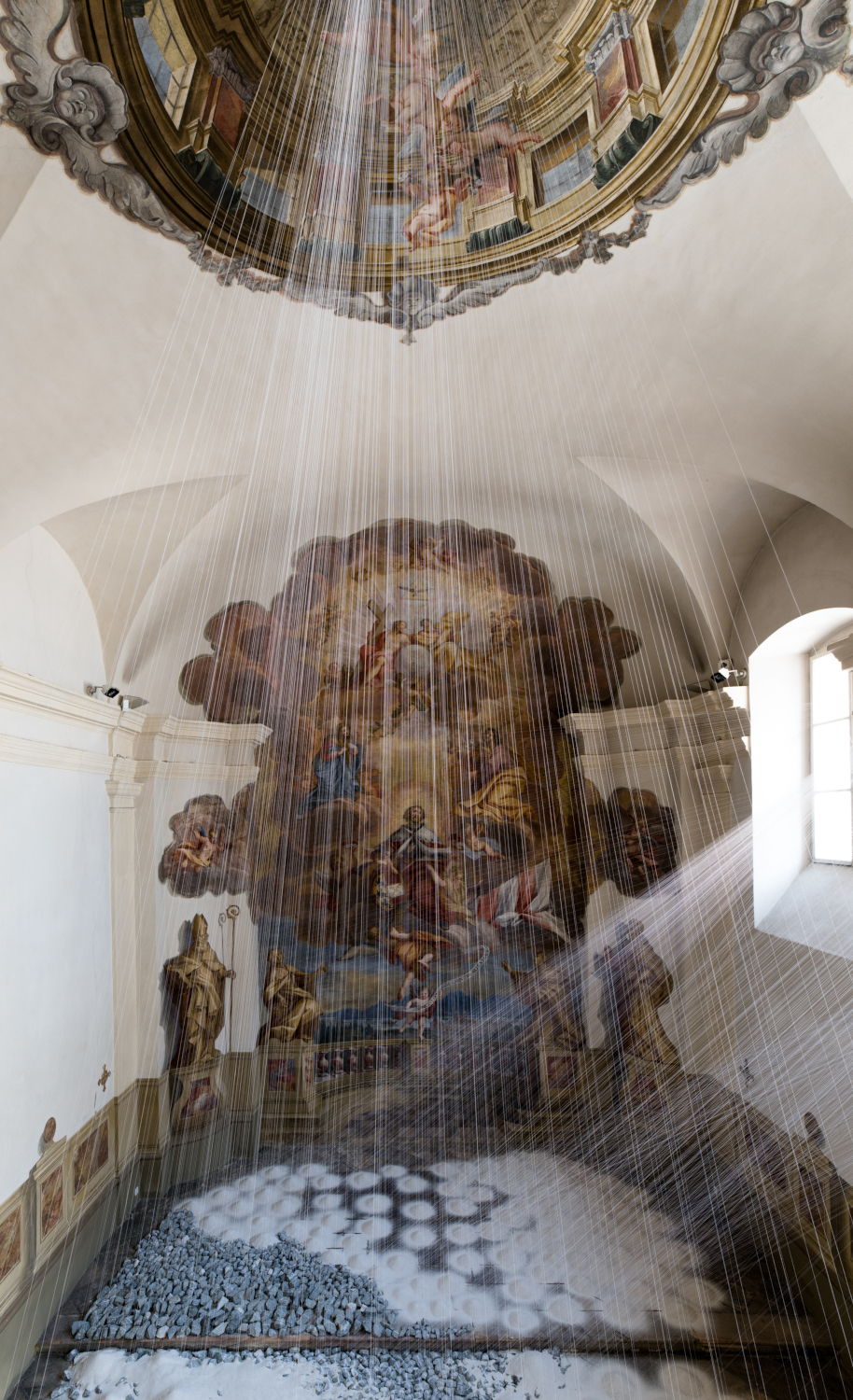
The ‘Burgkapelle’ (Castle Chapel) is a special gem of the Museum of Modern Art Carinthia and today serves as an art space for experimental, situational, and installation-based exhibition projects. The castle chapel is either integrated into the changing main exhibitions or used separately for independent projects that derive their special appeal from the spatial and thematic engagement with the former sacred space and its Baroque, illusionistic design.
The castle chapel was built in 1733–34 as part of the construction of the north facade of the castle. It was commissioned by Burgrave Wolfgang Sigismund, Imperial Count of Orsini and Rosenberg, and is dedicated to the legendary Carinthian Duke Domitian as well as to the memory of the burgraves, whose coats of arms are displayed on the west side of the chapel. The opposite altar wall is adorned with a wall-sized fresco by Josef Ferdinand Fromiller (1693–1760), Carinthia’s most important Baroque painter, depicting the Apotheosis of St. Domitian as well as Millstatt Abbey, whose founding is, according to legend, linked to the legendary Carinthian duke. The side walls feature depictions of saints venerated in Carinthia, including St. Hemma of Gurk, St. John of Nepomuk, and St. Modestus. The ceiling is adorned with an illusionistic painting depicting the architectural illusion of a church dome, within which small cherubs float upward.
Your visit
Your visit

Opening Hours
Tue - Sun from 10:00 a.m. to 6:00 p.m.
Thu: 10:00 a.m. to 8:00 p.m. (until 6:00 p.m. on holidays)
Closed on Mondays and during exhibition setup!

Directions
You can find detailed information on the location, how to get there and a map view via the link below.

Tickets
Adults € 8,-
Reduced € 4,-
Free admission for children and young people up to the age of 19!

Museum shop
In our museum shop, you’ll find publications relating to our exhibitions, limited-edition bags made from our recycled advertising banners, and a carefully selected range of products.

Children & Families
We have a wide range of activities and events for children, young people, families, school groups and nursery groups.

Accessibility
Every area of the MMKK is accessible via a lift. We also offer services for people with different needs.
